We are pleased to announce an exciting new alliance between Active Living Research and GP RED to co-host and coordinate...
Making the Connection: Linking Policies to Improve Public Safety with Preventing Childhood Obesity
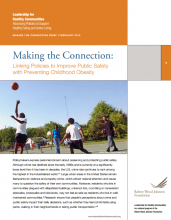
The Challenge: Residents who live in communities plagued with dilapidated buildings, unkempt lots, crumbling or nonexistent sidewalks, crosswalks and bike lanes, may not feel as safe as residents who live in well maintained communities. Research shows that people’s perceptions about crime and public safety impact their daily decisions, such as whether they feel comfortable using parks, walking in their neighborhoods or taking public transportation.
Make an impact: While public safety and obesity is seemingly unrelated, these issues share common solutions, including designing communities that allow residents to walk, bike and play safely and addressing residents’ concerns about crime.
What the findings are about: This brief discusses policy recommendations that are designed to reduce crime and improve the built environment, thus improving the safety of communities in ways that also could help reduce the high rates of obesity across the nation.
- Improve conditions that allow for safe active transport.
- Increase opportunities for children to walk or bike to school safely.
- Maintain and provide safe access to parks.
- Design communities to discourage crime and encourage physical activity.
- Implement approaches to engage the community and address perceptions about crime.
This brief coincided with the webinar Linking Policies to Improve Public Safety with Preventing Childhood Obesity.
STAY UP TO DATE
RECENTLY ADDED TOOLS & RESOURCES
MOVE! A BLOG ABOUT ACTIVE LIVING
The "Active Living Conference" aims to break down research and practice silos and...